
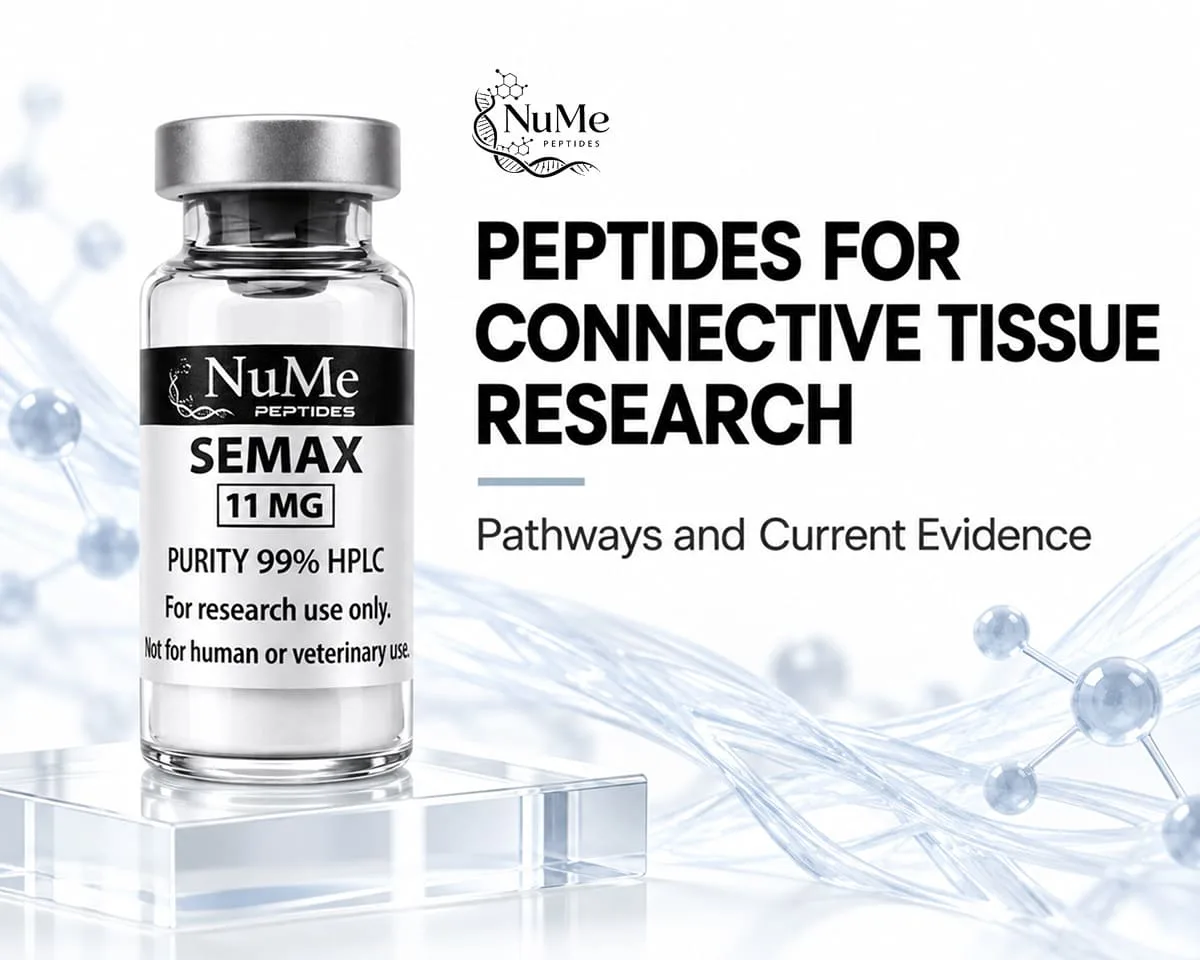
Peptides for Connective Tissue Research: Pathways and Current Evidence


Research into peptides for connective tissue research examines how experimental peptide compounds may influence collagen production, fibroblast activity, extracellular-matrix remodeling, angiogenesis, inflammation, and cellular migration. These processes are relevant to tendons, ligaments, skin, fascia, cartilage-associated structures, and other connective tissues.
Connective tissue regeneration is more complex than simply producing additional collagen. The extracellular matrix must be synthesized, degraded, reorganized, and mechanically adapted while vascular and inflammatory responses support the surrounding tissue. Consequently, researchers commonly evaluate several biological endpoints rather than relying on one marker of “repair.”
BPC-157, thymosin β4/TB-500-related compounds, and GHK-Cu are among the peptides frequently discussed in experimental regenerative research. However, their evidence bases differ considerably, and mechanistic findings should remain separate from established human outcomes.
For researchers looking for peptide materials for laboratory investigation, visit the Nume Peptides to explore the available research peptide collection.
What Is Connective Tissue Research and Why Is It Important?
Connective tissues provide structural support, transmit mechanical forces, organize organs, and create biological environments in which cells can function. They include diverse structures such as tendons, ligaments, dermis, fascia, cartilage, bone-associated matrices, and connective components surrounding muscles and blood vessels.
Although these tissues differ substantially, many share several important components:
- fibroblasts or related stromal cells;
- collagen fibres;
- elastin in selected tissues;
- proteoglycans;
- glycosaminoglycans;
- extracellular glycoproteins;
- matrix-remodeling enzymes.
Research focuses not only on how these components are produced but also on how they respond to injury, mechanical loading, inflammation, aging, and cellular stress.
Why regeneration can be challenging
Connective-tissue healing may be limited by several factors. Tendons and ligaments, for example, have relatively low vascularity compared with many other tissues. Dense collagen architecture can also take substantial time to reorganize after injury.
Researchers therefore examine multiple stages of repair:
- inflammatory signalling;
- recruitment and migration of repair-associated cells;
- fibroblast activation;
- matrix synthesis;
- angiogenesis where relevant;
- collagen reorganization;
- restoration of mechanical properties.
A tissue can show increased collagen production without fully recovering its original organization or function. This distinction is central to regenerative research.
Explore research compounds studied for tissue repair, recovery, collagen support, and regenerative science in the Healing & Recovery collection.
How Do Collagen and the Extracellular Matrix Influence Tissue Regeneration?
The extracellular matrix, or ECM, is not simply structural material surrounding cells. It also influences cell migration, signalling, differentiation, and mechanical behaviour. Collagen is one of its most important components. Type I collagen is abundant in tissues such as tendon, ligament, dermis, and bone-associated matrices, while other collagen types contribute specialized structural functions.
Collagen production and remodeling
Fibroblasts and related connective-tissue cells synthesize procollagen, which is processed and secreted before being organized into extracellular collagen fibrils. At the same time, the existing matrix is continually remodeled.
Important processes include:
- collagen synthesis;
- fibril assembly;
- cross-linking;
- proteoglycan production;
- matrix metalloproteinase activity;
- TIMP regulation;
- mechanical alignment of collagen fibres.
This balance matters because excessive matrix accumulation can contribute to fibrosis, whereas insufficient synthesis may weaken structural repair.
GHK-Cu research illustrates this principle well. In cultured fibroblasts, GHK-Cu has been reported to stimulate collagen synthesis. Separate research also found changes in MMP-2 and tissue inhibitors of metalloproteinases, suggesting involvement in both matrix formation and remodeling. (Maquart et al., 1988) (Siméon et al., 2000)
| ECM process | Research significance |
|---|---|
| Collagen synthesis | Creates new structural matrix |
| MMP activity | Supports degradation and remodeling |
| TIMP regulation | Controls metalloproteinase activity |
| Fibre alignment | Influences mechanical performance |
| Cross-linking | Contributes to tissue strength |
| Proteoglycan production | Influences hydration and matrix organization |
A regenerative compound should therefore not be evaluated solely by asking whether it increases collagen.
How Are Peptides Studied in Connective Tissue and Regenerative Research?
Researchers use several experimental systems because connective-tissue regeneration involves molecular, cellular, structural, and biomechanical changes.
Cell-based models
Fibroblasts, tenocytes, endothelial cells, myoblasts, and other specialized cell populations can be used to investigate specific mechanisms.
Researchers may measure:
- cell migration;
- proliferation;
- collagen expression;
- growth-factor signalling;
- MMP activity;
- inflammatory mediators;
- angiogenic responses.
Cell cultures provide useful mechanistic information but cannot reproduce the complete mechanical and vascular environment of intact tissue.
Animal injury models
Animal models allow researchers to study multiple processes simultaneously. Tendon, ligament, muscle, skin, and wound models can provide information about matrix organization, inflammation, angiogenesis, and structural repair.
Common endpoints include:
- histological appearance;
- collagen organization;
- vascular density;
- inflammatory-cell infiltration;
- tissue thickness;
- biomechanical strength;
- failure load.
Why biomechanical endpoints matter
Structural repair does not necessarily mean functional recovery. For connective tissues that transmit force, researchers may need to evaluate stiffness, tensile strength, or resistance to mechanical failure in addition to molecular markers.
A useful evidence progression is:
Molecular signalling → Cellular response → Matrix remodeling → Structural repair → Functional recovery
Experimental peptides may influence an early stage without producing equivalent changes at every later stage.
Which Peptides Are Investigated in Connective Tissue and Regeneration Studies?
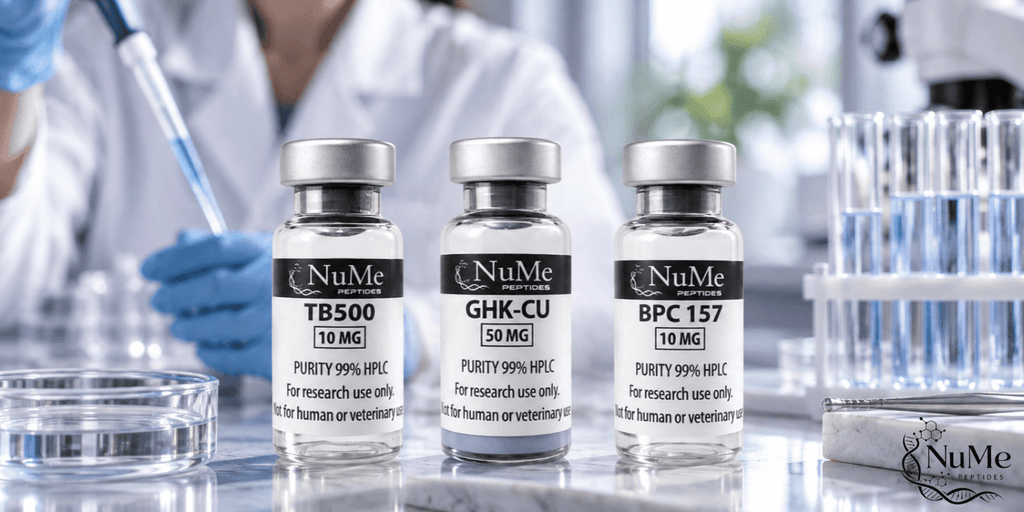
BPC-157, thymosin β4/TB-500-related compounds, and GHK-Cu represent three different areas of experimental regenerative research.
BPC-157
BPC-157 is a synthetic pentadecapeptide studied predominantly in preclinical musculoskeletal and tissue-repair models.
Research has examined potential relationships with:
- tendon and ligament healing;
- muscle injury;
- fibroblast migration;
- angiogenic signalling;
- inflammatory pathways;
- bone-associated repair;
- tissue organization.
A 2025 systematic review covering 36 orthopaedic and sports-medicine studies found that 35 were preclinical and only one involved humans. Animal studies included tendon, ligament, muscle, and bone models, but the authors emphasized the lack of adequate human safety data. (Vasireddi et al., 2025)
Therefore, BPC-157 remains primarily a preclinical research compound despite substantial experimental interest.
TB-500 and thymosin β4
TB-500 is frequently discussed in association with thymosin β4, but researchers should distinguish the commercial term from specifically characterized molecules used in scientific studies.
Thymosin β4 is a 43-amino-acid peptide that binds G-actin and participates in cytoskeletal regulation. Experimental research has investigated its effects on:
- cellular migration;
- endothelial behaviour;
- angiogenesis;
- inflammatory responses;
- wound repair;
- extracellular-matrix remodeling.
A study of experimental wound repair reported increased expression of several matrix metalloproteinases following thymosin β4 exposure, including MMP-2 and MMP-9, supporting a possible role in ECM remodeling. (Philp et al., 2006)
However, findings involving full-length thymosin β4 should not automatically be attributed to every TB-500-labelled research material.
GHK-Cu
GHK-Cu is the copper complex of glycyl-L-histidyl-L-lysine and has a long research history involving fibroblasts and connective-tissue biology. Laboratory research has reported increased fibroblast collagen synthesis following GHK-Cu exposure. (Maquart et al., 1988)
An animal wound model also reported increased accumulation of collagen, total protein, glycosaminoglycans, and other extracellular-matrix components. (Maquart et al., 1993)
GHK-Cu research therefore differs from BPC-157 and thymosin β4 because much of its evidence focuses directly on fibroblast and ECM biology.
| Research compound | Major areas investigated | Main evidence limitation |
|---|---|---|
| BPC-157 | Tendon, ligament, muscle, bone and angiogenesis | Human evidence remains very limited |
| Thymosin β4 / TB-500-related research | Cell migration, actin, angiogenesis and ECM remodeling | TB-500 cannot automatically be equated with full-length Tβ4 |
| GHK-Cu | Fibroblasts, collagen and extracellular matrix | Clinical regenerative evidence remains limited |
For experimental reproducibility, peptide sequence, batch information, HPLC results, mass-spectrometry identity, and analytical documentation should be considered when selecting research materials.
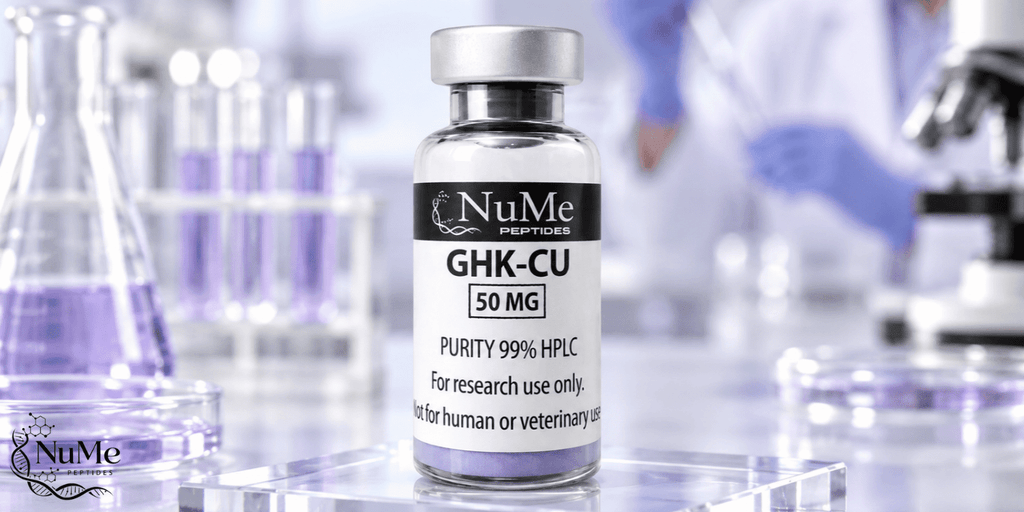
Explore research-use specifications, analytical documentation, and batch details for GHK-Cu (50 mg).
What Does Current Research Show About Peptides and Tissue Regeneration Pathways?
Current evidence suggests that experimental peptides can influence several pathways involved in connective-tissue regeneration. However, different compounds act on different aspects of the process, and the strongest evidence remains predominantly mechanistic or preclinical.
BPC-157 evidence remains largely preclinical
BPC-157 has been investigated in numerous animal musculoskeletal models. Research has reported changes involving fibroblast activity, vascular signalling, tissue organization, and biomechanical outcomes.
However, the limited number and quality of human studies remain major constraints. The 2025 systematic review identified only one human study among 36 eligible studies. (Vasireddi et al., 2025)
Therefore, experimental improvements in tendon, ligament, or muscle models cannot establish equivalent human regenerative effects.
Thymosin β4 research emphasizes migration and remodeling
Thymosin β4 research supports mechanistic roles involving actin dynamics, cell migration, angiogenesis, and matrix remodeling. These mechanisms are relevant because connective-tissue repair requires cells to migrate through a changing extracellular environment while old matrix is degraded and new matrix is formed. Nevertheless, molecular identity matters. Results from defined thymosin β4 preparations should not automatically be transferred to other peptide fragments or TB-500-labelled materials.
GHK-Cu provides direct ECM evidence
GHK-Cu has direct experimental evidence involving fibroblast collagen synthesis and extracellular-matrix accumulation. In addition, research showing changes in MMPs and TIMPs suggests that GHK-Cu may influence both production and turnover of connective tissue. (Siméon et al., 2000)
This makes it particularly relevant to studies examining matrix homeostasis rather than collagen synthesis alone.
Evidence should be interpreted at several levels
Researchers can separate regenerative evidence into the following categories:
- molecular pathway changes;
- altered cell migration or proliferation;
- changes in ECM production;
- improved tissue architecture;
- altered biomechanical properties;
- demonstrated human outcomes.
A compound can affect the first three categories without necessarily producing the final three.
Canadian research context
Health Canada has identified BPC-157, TB-500, and GHK-Cu among unauthorized injectable peptide products encountered in Canada. Unauthorized products have not been assessed by Health Canada for therapeutic safety, efficacy, and quality. (Health Canada, 2026)
This regulatory status should remain separate from laboratory research. Experimental findings about collagen, fibroblasts, angiogenesis, or ECM remodeling do not establish therapeutic authorization.
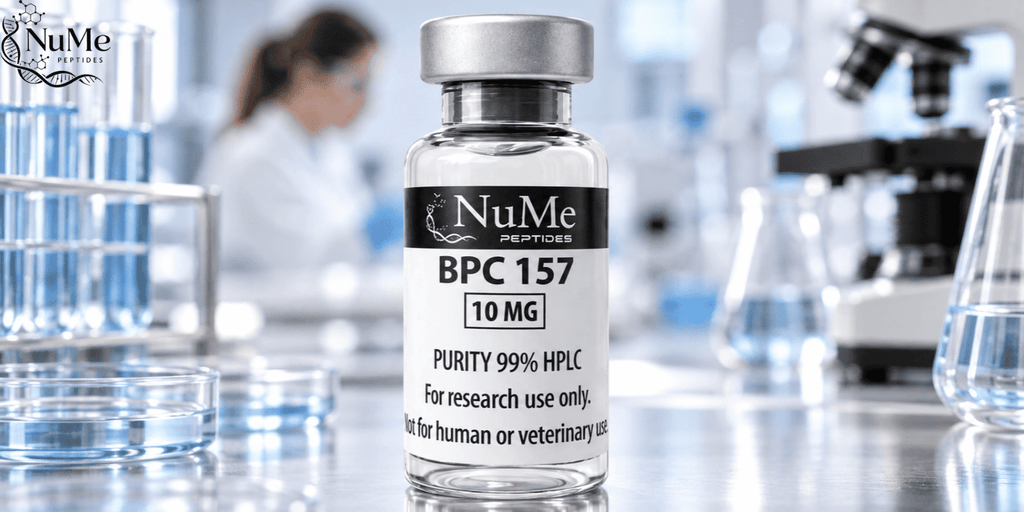
Explore batch-specific testing, analytical documentation, and research-use details for BPC-157 (10 mg).
FAQs About Peptides for Connective Tissue and Regenerative Research
What Are Peptides for Connective Tissue Research?
They are peptide compounds investigated for potential effects on fibroblast activity, collagen production, cell migration, angiogenesis, inflammation, and extracellular-matrix remodeling.
Why Is the Extracellular Matrix Important in Regeneration?
The ECM provides structural support while also influencing cellular migration, signalling, differentiation, and mechanical behaviour. Successful regeneration therefore depends on matrix organization as well as matrix production.
Is BPC-157 Proven to Regenerate Human Connective Tissue?
No. Current evidence remains dominated by preclinical research, and robust controlled human evidence is insufficient to establish regenerative effectiveness. (Vasireddi et al., 2025)
Is TB-500 the Same as Thymosin β4?
They should not automatically be treated as identical. Researchers should verify molecular sequence and identity before applying findings from full-length thymosin β4 studies to TB-500-labelled materials.
Why Is GHK-Cu Studied in Connective Tissue Research?
GHK-Cu has been investigated because laboratory and animal studies have reported effects on fibroblast collagen synthesis, extracellular-matrix accumulation, and matrix-remodeling systems.
Does Increased Collagen Mean Connective Tissue Is Fully Regenerated?
No. Collagen organization, fibre alignment, cross-linking, degradation, vascular support, cellular integration, and mechanical performance are also important.
Conclusion
Research into peptides for connective tissue research examines an interconnected system involving fibroblasts, collagen, extracellular-matrix remodeling, cellular migration, angiogenesis, inflammation, and mechanical adaptation.
BPC-157 has generated substantial preclinical interest across tendon, ligament, muscle, and other musculoskeletal models, although human evidence remains limited. Thymosin β4 research provides mechanistic evidence involving actin regulation, cellular migration, angiogenesis, and matrix remodeling, while TB-500 should be interpreted carefully unless its molecular identity is clearly established. GHK-Cu has direct laboratory and animal evidence involving fibroblast collagen production and extracellular-matrix accumulation.
The strongest interpretation therefore separates molecular signalling from matrix remodeling, structural repair from biomechanical recovery, and preclinical evidence from established human outcomes.
For researchers looking for peptide materials for laboratory investigation, visit the Nume Peptides to explore the available research peptide collection.
Disclaimer: This content is provided for educational and scientific research purposes only. Research peptides are intended for laboratory research only and are not intended for human consumption or medical use.