

Research Peptide Supplier: What Should Researchers Look for When Evaluating a Source?


Choosing a research peptide supplier involves more than comparing product availability or headline purity percentages. For laboratory research, researchers should evaluate whether a supplier can provide traceable materials, relevant analytical testing, clear batch documentation, appropriate storage information, and consistent support throughout the research supply chain.
This is important because synthetic peptide materials can differ in purity, identity, peptide content, impurity profiles, and stability. Scientific recommendations for peptide reference materials emphasize the importance of detailed characterization rather than relying on a single purity value. (Hoofnagle et al., 2016)
For Canadian researchers, Health Canada’s guidance for regulated active pharmaceutical ingredients provides useful quality-control principles involving supplier qualification, batch traceability, Certificates of Analysis, analytical testing, and documented storage practices. These requirements apply to regulated APIs rather than ordinary research-use peptides, but they provide a useful framework for evaluating laboratory suppliers. (Health Canada, 2022)
For researchers looking for peptide materials for laboratory investigation, visit NuMe Peptides to explore the available research peptide collection and supporting product information.
For researchers looking for peptide materials for laboratory investigation, visit the Nume Peptides to explore the available research peptide collection.
What Role Does a Research Peptide Supplier Play in the Research Supply Chain?
A research peptide supplier connects peptide production with the laboratory using the material. Depending on its business model, a supplier may manufacture peptides directly, source materials from another manufacturer, coordinate analytical testing, package products, store inventory, and distribute completed batches.
Understanding that role helps researchers determine where quality information originates.
Manufacturer, distributor, or reseller
A supplier may operate as:
- an original peptide manufacturer;
- a distributor working directly with a manufacturer;
- a reseller sourcing finished products;
- a company that coordinates manufacturing and independent testing.
None of these models automatically guarantees or reduces quality. Instead, researchers should evaluate whether the material remains traceable throughout the supply chain.
For example, a supplier should ideally be able to connect a particular product to:
Product identity → Production batch → Analytical testing → COA → Storage → Distribution
Scientific guidance on peptide reference materials notes that commercial peptide quality can be difficult to evaluate when production sources or characterization records are unclear. Detailed specifications and appropriate analytical characterization therefore help researchers evaluate materials more reliably. (Hoofnagle et al., 2016)
Why supply-chain visibility matters
If an experimental result appears unusual, traceability can help researchers investigate whether the issue may relate to:
- a specific production batch;
- storage history;
- analytical differences;
- degradation;
- handling conditions;
- an unexpected impurity.
Without clear batch information, determining whether two research samples are genuinely comparable becomes more difficult.
For researchers looking for peptide materials for laboratory investigation, browse the Nume Peptides Shop to explore the available research collection.
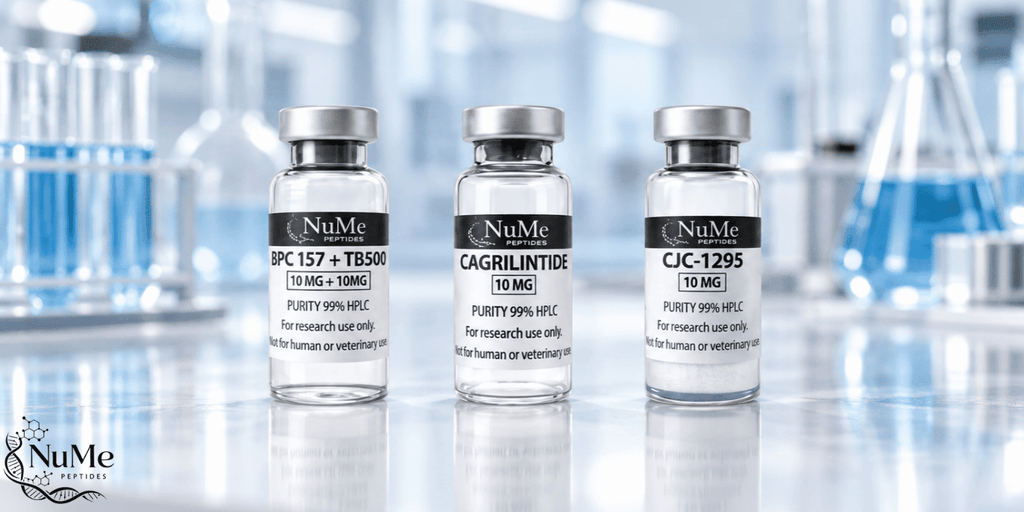
What Quality Information Should a Research Peptide Supplier Provide?
A supplier should provide enough information for researchers to understand what the material is and what analytical evidence supports its stated characteristics.
Useful quality information may include:
- peptide or compound name;
- product specification;
- batch or lot number;
- Certificate of Analysis;
- HPLC or comparable chromatographic data;
- mass-spectrometry results where identity is evaluated;
- analytical testing date;
- testing laboratory information;
- storage recommendations;
- relevant formulation information.
Product specifications
A product listing should clearly identify the research material.
Depending on the peptide, relevant details may include the peptide name, nominal quantity, presentation, molecular information, and storage recommendations.
These details establish what the supplier claims to provide before researchers begin evaluating laboratory results.
Analytical characterization
Different analytical techniques provide different types of evidence.
HPLC is commonly used to assess chromatographic composition and relative purity. Mass spectrometry, meanwhile, provides molecular-mass information that can support peptide identity.
Modern peptide characterization frequently combines multiple analytical approaches because purity, identity, content, and stability are separate quality attributes. (Højrup, 2024)
| Supplier information | What it helps researchers assess |
|---|---|
| Product specification | Intended research material |
| Lot number | Batch traceability |
| HPLC result | Relative chromatographic purity |
| MS result | Molecular-mass evidence |
| Test date | Timing of analysis |
| Laboratory identity | Source of analytical data |
| Storage instructions | Appropriate handling conditions |
| Batch-specific COA | Relationship between testing and material |
The goal is not to require every possible test. Instead, the documentation should support the specific claims the supplier makes.
For researchers looking for documented laboratory materials, browse the NuMe Peptides collection to review available research products.
Why Do Testing Transparency and Batch Documentation Matter?
Testing transparency helps researchers distinguish analytical evidence from marketing statements.
For example, the phrase “99% purity” is more meaningful when the accompanying documentation explains:
- which method measured purity;
- which batch was tested;
- when testing occurred;
- which laboratory performed the analysis;
- what numerical result was obtained;
- whether supporting analytical data are available.
HPLC and mass spectrometry answer different questions
HPLC and mass spectrometry should not be treated as interchangeable tests.
HPLC separates components according to chromatographic behaviour and can provide information about relative peak areas.
Mass spectrometry measures ions according to mass-to-charge ratio and can support molecular identity by comparing observed and theoretical molecular mass.
LC-MS combines chromatographic separation with mass information. This combination can help researchers characterize peptide-related impurities arising from synthesis, processing, or storage. (Lian et al., 2021)
Batch-specific documentation improves traceability
A research peptide supplier may distribute the same peptide over multiple production cycles.
However, an analytical report from one historical lot should not automatically be assumed to represent another batch.
Researchers should therefore compare:
- product lot number;
- COA batch number;
- HPLC results;
- MS results;
- analytical date;
- laboratory information.
Health Canada’s regulated API guidance similarly emphasizes batch-specific Certificates of Analysis, traceable records, test results, and specifications. Although research-use peptides do not automatically fall under these pharmaceutical requirements, the documentation principles provide a useful quality benchmark. (Health Canada, 2022)
For researchers looking for peptide materials for laboratory investigation, browse the Nume Peptides Shop to explore the available research collection.
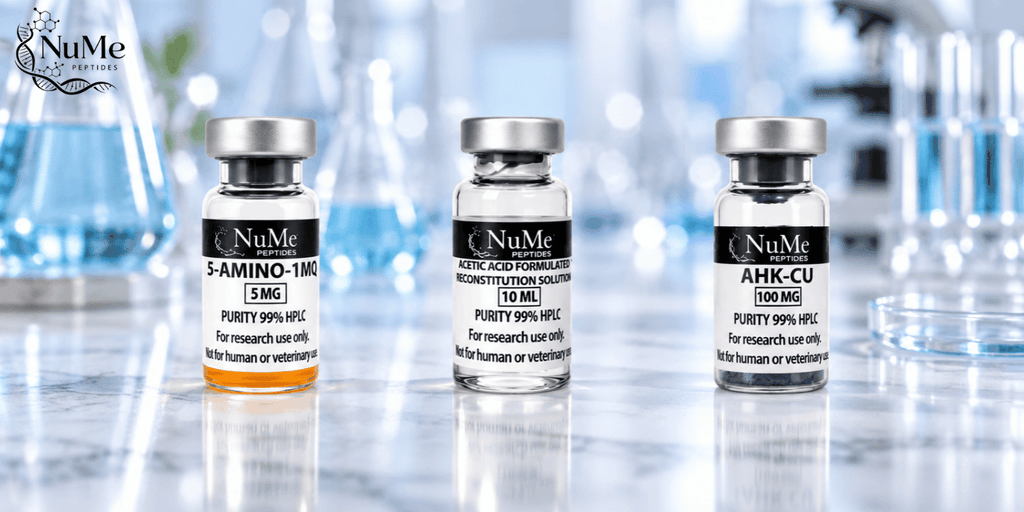
What Operational Factors Should Researchers Consider When Comparing Suppliers?
Analytical testing is important, but supplier evaluation should also consider how materials are stored, documented, shipped, and supported.
Storage and handling
Peptides can be sensitive to environmental conditions.
Depending on the material, factors that may influence stability include:
- temperature;
- moisture;
- oxygen exposure;
- light;
- repeated handling;
- storage duration.
Suppliers should therefore provide clear storage recommendations appropriate to the research material.
Health Canada’s regulated drug-distribution guidance emphasizes maintaining appropriate environmental conditions during storage and transportation, including temperature and other conditions that may affect product quality. Again, these requirements apply to regulated products, but the principle remains useful when evaluating research-material logistics. (Health Canada, 2020)
Documentation accessibility
Researchers should consider how easily they can obtain relevant quality information.
Useful documentation may include:
- current COAs;
- historical batch records;
- storage instructions;
- analytical reports;
- product specifications;
- clarification about testing methods.
A supplier with strong laboratory testing but poor documentation access may still create uncertainty for research teams.
Batch continuity
Batch continuity can matter when experiments require repeated purchases over time.
Researchers may want to determine:
- whether several units come from the same lot;
- whether a new lot is clearly identified;
- whether a new COA accompanies a batch change;
- whether previous batch records remain accessible;
- whether analytical differences are communicated.
These operational factors are particularly relevant for experiments that compare samples across multiple time points.
For researchers looking for peptide materials for laboratory investigation, browse the Nume Peptides Shop to explore the available research collection.
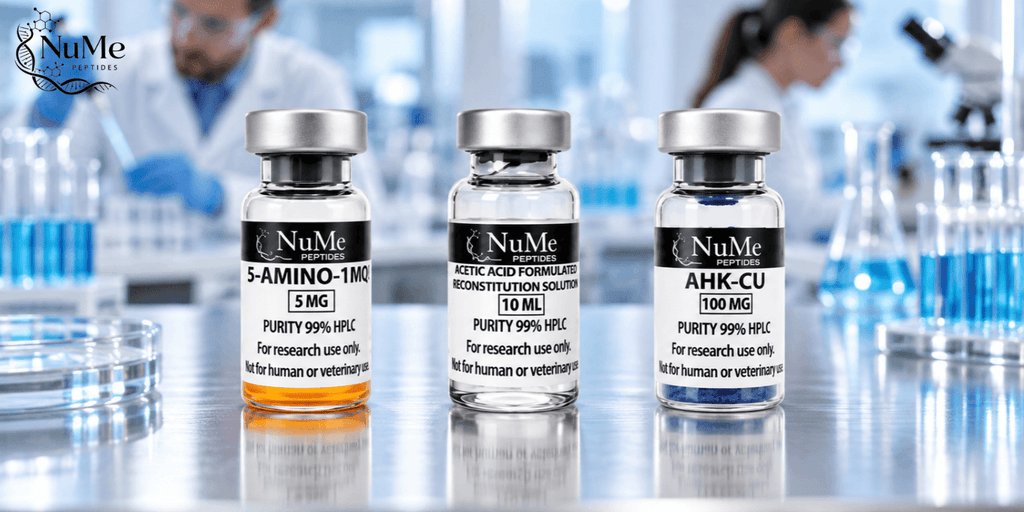
How Can Researchers Compare Research Peptide Suppliers Objectively?
Researchers can reduce the influence of marketing language by applying the same evaluation criteria to every supplier.
Instead of asking which company appears more professional, researchers can compare the evidence available for each source.
Use consistent evaluation criteria
| Evaluation area | Question to ask | Stronger indicator |
|---|---|---|
| Product identity | Is the peptide clearly identified? | Detailed specification |
| Batch traceability | Is a lot number provided? | Product and COA match |
| Purity testing | Is chromatography documented? | Numerical HPLC result |
| Identity testing | Is MS information available? | Theoretical and observed mass |
| Laboratory transparency | Who performed testing? | Identifiable laboratory |
| Documentation | Is the COA batch-specific? | Current lot-specific report |
| Storage | Are conditions stated? | Clear handling instructions |
| Batch continuity | Are new lots documented? | Updated COA for each lot |
| Research positioning | Is intended use clear? | Consistent research-use language |
Do not compare suppliers using purity percentages alone
A peptide listed as 99.8% HPLC purity should not automatically be considered superior to one reported at 99.3%.
Several questions still matter:
- Were the same analytical methods used?
- Were chromatographic conditions comparable?
- How were peaks integrated?
- Were the results batch-specific?
- Was identity also evaluated?
- Were additional impurities characterized?
A small numerical difference may therefore be less meaningful than differences in analytical methods or documentation quality.
Evaluate the full evidence package
An objective supplier comparison should consider several independent attributes:
- Product identity.
- Batch traceability.
- Chromatographic purity.
- Molecular identity.
- Documentation quality.
- Storage information.
- Operational consistency.
Scientific recommendations for synthetic peptide standards similarly emphasize that purity alone does not describe all aspects of peptide quality. Characterization may also require evaluation of identity, peptide content, impurities, stability, and storage conditions. (Hoofnagle et al., 2016)
This approach allows researchers to compare suppliers based on evidence rather than a single marketing metric.
Learn how identity, purity, analytical testing, and documentation work together when evaluating peptide materials in our guide: Research Peptide Quality: How to Evaluate Testing, Documentation and Verification
FAQs About Research Peptide Suppliers
What Should Researchers Look for in a Research Peptide Supplier?
Researchers should evaluate product identification, batch traceability, analytical testing, COAs, laboratory transparency, storage information, documentation accessibility, and operational consistency.
No single quality claim should replace the broader evaluation.
Should a Research Peptide Supplier Provide a COA?
A batch-specific COA is valuable because it helps connect analytical results with a specific production lot.
However, researchers should also evaluate what information the certificate actually contains.
Is Third-Party Testing Important?
Independent testing can increase analytical transparency by separating the testing laboratory from the supplier.
However, researchers should still determine which laboratory conducted the analysis, which batch was tested, which methods were used, and what results were obtained.
Is HPLC Purity Enough to Evaluate a Supplier?
No.
HPLC is useful for evaluating relative chromatographic purity, but it does not independently establish complete molecular identity, peptide content, long-term stability, or every possible impurity.
Why Is Batch Traceability Important?
Batch traceability allows researchers to connect a physical research material with its corresponding analytical documentation.
It can also help identify whether different experimental samples came from the same or different production lots.
Should Canadian Researchers Only Use Canadian Suppliers?
Not necessarily.
Supplier location alone does not establish analytical quality.
However, Canadian researchers may consider factors such as shipping duration, documentation accessibility, storage during transportation, communication, customs logistics, and the ability to obtain batch-specific information.
The supplier should ultimately be evaluated using analytical evidence and operational suitability rather than geography alone.
Conclusion
Selecting a research peptide supplier should be treated as a research procurement decision rather than a simple product comparison.
Researchers should evaluate:
- material identification;
- batch traceability;
- analytical testing;
- COA quality;
- laboratory transparency;
- storage information;
- documentation accessibility;
- supply consistency;
- operational communication.
Most importantly, researchers should distinguish analytical evidence from promotional claims. A supplier becomes easier to evaluate when product specifications, batch numbers, laboratory results, and handling information create a clear and traceable documentation chain.
For Canadian researchers, Health Canada’s regulated API and distribution frameworks provide useful reference principles involving supplier qualification, reliable analytical testing, batch documentation, traceability, and appropriate storage conditions. These pharmaceutical requirements should not automatically be applied to ordinary research-use peptides, but they offer a useful framework for evaluating supply-chain quality. (Health Canada, 2022)
For researchers looking for peptide materials for laboratory investigation, visit the Nume Peptides to explore the available research peptide collection.
Disclaimer: This content is provided for educational and scientific research purposes only. Research peptides are intended for laboratory research only and are not intended for human consumption or medical use.


Choosing a reliable research peptide supplier requires more than comparing prices. Clear product documentation, batch-specific Certificates of Analysis, and transparent testing information are important factors when evaluating supplier credibility.
I found this topic useful because supplier quality and documentation can vary considerably. Checking analytical methods, verifying the source of testing results, and reviewing relevant laboratory records can help researchers make better-informed assessments.
A useful reminder that transparency matters when evaluating suppliers in the research peptide field. I would also look for traceable batch information and independent verification where available, rather than relying solely on marketing claims or a certificate’s appearance.
https://webtoolreviews.wordpress.com/2026/10/12/how-to-download-tiktok-videos-without-watermark-in-hd-iphone-android-pc/