
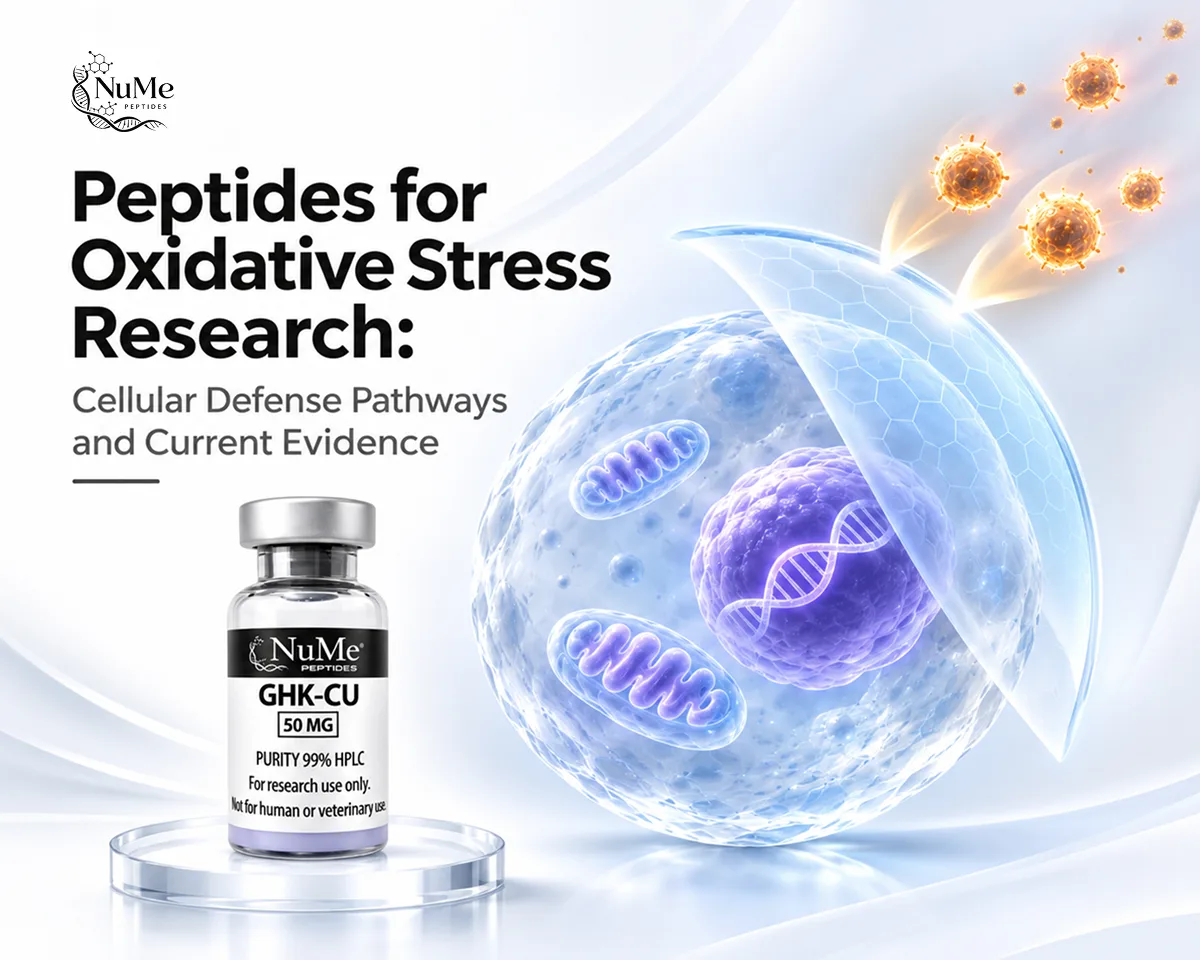
Peptides for Oxidative Stress Research: Cellular Defense Pathways and Current Evidence


Peptides for Oxidative Stress Research are investigated to understand how cells manage reactive oxygen species (ROS), maintain redox balance, protect proteins and membranes, and activate adaptive defense pathways during cellular stress. Oxidative stress is not simply the presence of ROS. Molecules such as hydrogen peroxide and superoxide also participate in normal cellular signalling; problems arise when oxidant production exceeds the capacity of cellular defense and repair systems.
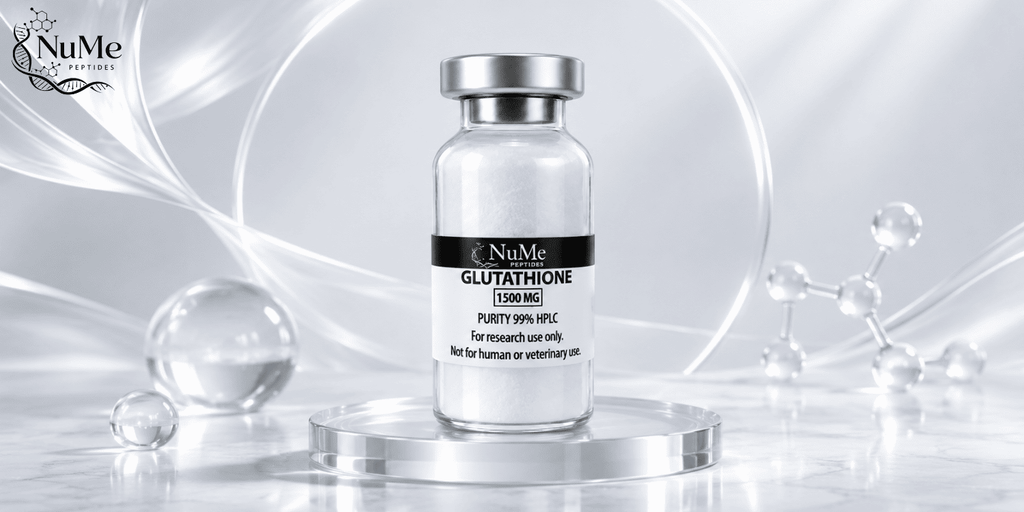
Glutathione, SS-31, NAD+, and MOTS-C provide different experimental approaches to this field. Glutathione is a naturally occurring tripeptide central to intracellular redox defense, SS-31 is a mitochondria-targeting tetrapeptide associated with cardiolipin and mitochondrial ROS regulation, MOTS-C is a mitochondria-derived peptide investigated in stress-responsive signalling, while NAD+ is a metabolic coenzyme rather than a peptide.
For researchers looking for peptide materials for laboratory investigation, visit the Nume Peptides to explore the available research peptide collection.
What Is Oxidative Stress in Cellular Research?
Oxidative stress describes an imbalance between oxidant production and the cellular systems responsible for controlling or repairing oxidative changes. ROS arise naturally during metabolism and include superoxide, hydrogen peroxide, and hydroxyl radicals. Reactive nitrogen species can also contribute to cellular redox chemistry.
Mitochondrial electron transport is one important source of ROS, but oxidants can also originate from NADPH oxidases, peroxisomes, inflammatory processes, and other enzymatic reactions. At controlled concentrations, ROS can function as signalling molecules. Excessive or poorly regulated production, however, may modify lipids, proteins, and nucleic acids.
Researchers commonly assess oxidative stress through endpoints such as:
- intracellular ROS production;
- hydrogen peroxide concentration;
- lipid peroxidation;
- protein oxidation;
- glutathione redox status;
- antioxidant enzyme activity;
- mitochondrial membrane function;
- oxidative DNA-damage markers.
Glutathione is particularly important in these experiments. Reduced glutathione (GSH) acts directly in antioxidant defense and also functions as a cofactor for glutathione peroxidases. During peroxide detoxification, GSH is oxidized to glutathione disulfide (GSSG), which can then be converted back to GSH through glutathione reductase using NADPH. (Averill-Bates, 2023)
| Redox marker | What it can indicate |
|---|---|
| GSH | Reduced intracellular glutathione availability |
| GSSG | Oxidized glutathione pool |
| GSH/GSSG relationship | Cellular redox status |
| ROS | Oxidant generation |
| Lipid peroxidation | Oxidative modification of membrane lipids |
| Protein carbonyls | Protein oxidation |
| GPx activity | Enzymatic peroxide detoxification |
| SOD activity | Superoxide defense |
A single ROS measurement therefore provides only part of the picture. Strong oxidative-stress research generally combines oxidant measurements with antioxidant capacity, damage markers, and cellular function.
Explore research compounds for metabolic signaling, energy regulation, and longevity pathways in the Metabolic & Longevity collection.
How Do Cells Respond to Reactive Oxygen Species?
Cells use several overlapping defense systems to keep ROS within a biologically manageable range. Some systems directly convert reactive molecules into less reactive products, while others activate transcriptional responses that increase longer-term cellular resistance.
Glutathione-dependent defense
The glutathione system is one of the major intracellular redox-buffering networks. GSH participates in peroxide reduction, detoxification of electrophilic compounds, protection of protein thiols, and reversible protein S-glutathionylation.
Glutathione peroxidases use GSH to reduce hydrogen peroxide and lipid hydroperoxides. GSSG generated in this process is subsequently recycled back to GSH, allowing the antioxidant system to continue functioning. Glutathione also interacts with vitamin C, vitamin E, glutathione S-transferases, and other defense mechanisms. (Averill-Bates, 2023)
Superoxide dismutase and catalase
Superoxide dismutases convert superoxide into hydrogen peroxide. Hydrogen peroxide can then be processed by catalase, glutathione peroxidases, and peroxiredoxins.
This sequence illustrates an important point: antioxidant defense does not necessarily eliminate all ROS. Instead, cells transform reactive species and regulate their concentration so that signalling can continue without uncontrolled oxidative damage.
NRF2-related stress response
The NRF2/KEAP1 system helps coordinate transcription of numerous antioxidant and detoxification genes. Under oxidative or electrophilic stress, NRF2 activity can increase expression of enzymes involved in glutathione metabolism, NADPH generation, and cellular detoxification.
MOTS-C has been investigated in this context. In H9c2 cardiomyocyte cells exposed to hydrogen peroxide, MOTS-C pretreatment was associated with activation of the NRF2/antioxidant response element pathway and reduced oxidative-stress-related changes. The experiment was performed in cultured rat cardiac cells, so it represents mechanistic rather than human evidence. (Shen et al., 2022)
The main cellular defense systems can be summarized as:
- SOD converts superoxide into hydrogen peroxide.
- Catalase and peroxidases process hydrogen peroxide.
- GSH supports peroxide removal and redox buffering.
- NADPH supports regeneration of reduced antioxidant systems.
- NRF2 coordinates longer-term stress-response gene expression.
- Damaged proteins, lipids, and organelles are repaired or removed through quality-control pathways.
How Are Peptides Studied in Oxidative Stress Research?
Oxidative stress experiments typically use controlled cellular or tissue models in which oxidant exposure can be increased and the resulting defense response measured.
Researchers may induce oxidative stress using hydrogen peroxide, ischemia-reperfusion, inflammatory stimuli, mitochondrial dysfunction, or other experimental stressors. A candidate peptide or compound is then evaluated for its effect on redox markers and cellular function.
Common research endpoints include:
- intracellular ROS fluorescence;
- GSH and GSSG;
- glutathione peroxidase activity;
- superoxide dismutase activity;
- lipid peroxidation markers;
- mitochondrial respiration;
- membrane potential;
- ATP production;
- NRF2-related gene expression;
- cell viability after oxidative challenge.
The experimental design matters because a lower ROS measurement can result from several mechanisms. A compound might directly react with an oxidant, reduce mitochondrial ROS production, increase endogenous antioxidant defenses, or improve mitochondrial electron transfer so that fewer electrons leak toward ROS formation.
For this reason, compounds should not automatically be described as conventional “antioxidants” simply because an experiment reports reduced oxidative damage.
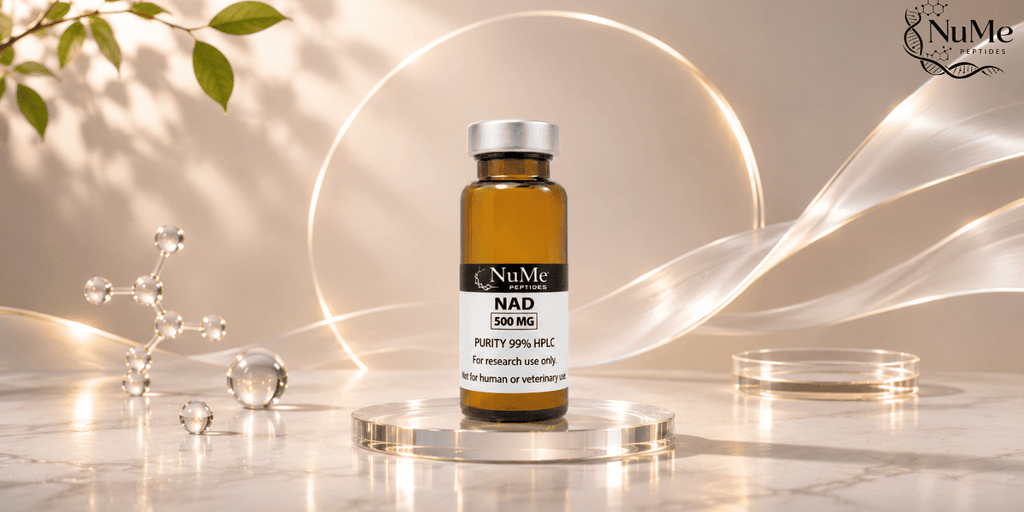
Explore laboratory research into cellular energy metabolism, redox balance, and aging-related pathways with NAD+ (500 mg).
Which Peptides and Compounds Are Investigated in Cellular Defense Research?
Glutathione, SS-31, NAD+, and MOTS-C operate at different levels of redox biology.
| Compound | Molecular class | Main research focus | Evidence profile |
|---|---|---|---|
| Glutathione | Endogenous tripeptide | Redox buffering and peroxide detoxification | Extensive biological evidence |
| SS-31 | Synthetic tetrapeptide | Mitochondrial membrane and cardiolipin | Preclinical + human research |
| NAD+ | Endogenous coenzyme | Redox metabolism and cellular signalling | Extensive biological evidence |
| MOTS-C | Mitochondria-derived peptide | Stress-response signalling | Mainly preclinical |
Glutathione
Glutathione consists of glutamate, cysteine, and glycine and is one of the major low-molecular-weight thiols found inside cells. Its importance extends beyond direct antioxidant chemistry.
GSH supports glutathione peroxidase reactions, xenobiotic detoxification, maintenance of protein thiols, and redox-dependent regulation of proteins. It also contributes to ferroptosis-related biology and protection from lipid peroxide accumulation. (Averill-Bates, 2023)
For research purposes, GSH concentration alone is not always sufficient. The relationship between GSH and GSSG, antioxidant-enzyme activity, and compartment-specific glutathione pools can provide a more complete picture of redox status.
SS-31
SS-31, also known as elamipretide, is a synthetic tetrapeptide that concentrates at mitochondrial membranes and interacts with cardiolipin.
Cardiolipin is important for inner mitochondrial membrane architecture and electron transport. Experimental work showed that SS-31 binds cardiolipin and can reduce cardiolipin-associated cytochrome c peroxidase activity while preserving cytochrome c electron-carrier function. These effects can influence mitochondrial respiration and oxidative phosphorylation. (Birk et al., 2013)
This is different from directly scavenging all cellular ROS. SS-31 research instead focuses on mitochondrial membrane organization, electron transfer, and the conditions that influence mitochondrial oxidant generation.
NAD+
NAD+ is not a peptide. It is an essential coenzyme involved in oxidation-reduction reactions and acts together with its reduced form, NADH, in cellular metabolism.
The NAD+/NADH relationship is directly relevant to redox state. NAD+ also serves as a substrate for sirtuins, PARPs, and other enzymes involved in stress responses, DNA repair, and mitochondrial regulation. (Lautrup et al., 2024)
However, the established biological importance of NAD+ should be distinguished from the evidence for external NAD+ supplementation. A 2026 systematic review found consistent biochemical effects from oral NAD+ precursors such as NR and NMN, but functional and metabolic outcomes in human trials remained heterogeneous. (Gallagher & Emmanuel, 2026)
MOTS-C
MOTS-C is a mitochondria-derived peptide investigated primarily as a stress-responsive signalling molecule rather than as a direct ROS scavenger.
In a cellular oxidative-stress model, MOTS-C was associated with increased NRF2/ARE signalling, changes in HO-1 and NQO-1 expression, and reduced hydrogen-peroxide-associated cellular injury. Inhibition of NRF2 reduced the observed effect, supporting the involvement of this pathway. (Shen et al., 2022)
The evidence remains predominantly preclinical, and these findings should not be interpreted as established antioxidant effects in humans.
What Does Current Evidence Show About Peptides and Oxidative Stress Pathways?
Current research supports several distinct mechanisms rather than a single universal antioxidant pathway.
Glutathione provides direct redox-buffering capacity
Among the compounds discussed here, glutathione has the most established direct role in cellular antioxidant defense. The GSH/GSSG cycle participates directly in peroxide detoxification and maintenance of protein redox state.
This makes glutathione particularly useful as both a biological defense molecule and a research marker of cellular redox balance.
SS-31 targets the mitochondrial source of oxidative stress
SS-31 research suggests that oxidant control can sometimes be approached upstream. Instead of simply neutralizing ROS after they form, improving cardiolipin-dependent electron transport may reduce conditions that favour mitochondrial ROS production.
Recent animal research continues to report reduced mitochondrial ROS emissions and improved respiratory efficiency following SS-31 exposure in specific injury models, but these findings remain model-dependent.
MOTS-C may activate endogenous defense signalling
MOTS-C provides another distinct mechanism. Available experimental evidence suggests that it can influence NRF2-related antioxidant responses under oxidative challenge rather than functioning primarily as a chemical antioxidant.
This distinction is important because activation of cellular defense genes and direct ROS scavenging are not equivalent mechanisms.
NAD+ links redox state with metabolism
NAD+ participates in both energy metabolism and redox regulation. Changes in NAD+/NADH relationships can influence mitochondrial metabolism, while NAD+-dependent enzymes connect metabolic state with cellular stress responses. Recent reviews continue to describe NAD+ metabolism as an important component of redox homeostasis. (McReynolds, 2026)
Overall, oxidative-stress research is most informative when it separates four questions:
- Is ROS production changing?
- Is antioxidant capacity changing?
- Is measurable molecular damage changing?
- Is cellular or mitochondrial function being preserved?
A positive result in one category does not necessarily establish improvement in all four.
Canadian research context
Health Canada currently identifies SS-31 and MOTS-C among unauthorized synthetic peptide ingredients found in products promoted for human use in Canada. NAD+ has also appeared among unauthorized injectable products addressed in Canadian enforcement actions. On November 6, 2026, Health Canada issued an advisory after laboratory testing detected bacterial contamination in unauthorized injectable peptide and non-peptide products, including MOTS-C and NAD+.
Health Canada also states that products labelled “For Research Use Only – Not for Human Consumption” are intended for laboratory use and that such wording does not authorize their use as human drug products. Legitimate laboratory research should therefore remain clearly separated from therapeutic use.
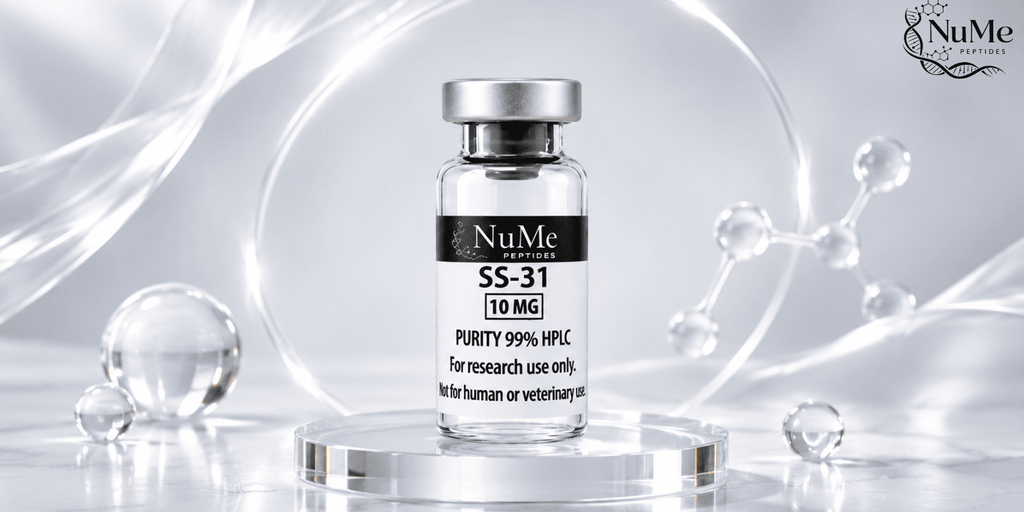
Explore laboratory research into mitochondrial function, cardiolipin binding, and electron transport chain efficiency with SS-31 (10 mg).
FAQs About Peptides for Oxidative Stress Research
What Is Oxidative Stress?
Oxidative stress occurs when oxidant production and cellular redox-control systems become imbalanced to a degree that disrupts signalling or contributes to molecular damage.
Is Glutathione a Peptide?
Yes. Glutathione is a naturally occurring tripeptide composed of glutamate, cysteine, and glycine.
Does SS-31 Directly Scavenge Reactive Oxygen Species?
Its mechanism is more complex than conventional direct antioxidant scavenging. SS-31 interacts with mitochondrial cardiolipin and can influence electron transport, membrane organization, and mitochondrial ROS production.
How Is MOTS-C Connected to Oxidative Stress?
Preclinical research links MOTS-C with NRF2/ARE-related cellular defense signalling and reduced oxidative injury in selected experimental models.
Is NAD+ an Antioxidant Peptide?
No. NAD+ is a metabolic coenzyme, not a peptide. Its relevance to oxidative-stress research comes from redox metabolism and NAD+-dependent cellular signalling.
Can Lower ROS Always Be Considered Beneficial?
No. ROS also participate in normal signalling. Research should distinguish controlled physiological ROS activity from excessive oxidant production and molecular oxidative damage.
Conclusion
Peptides for Oxidative Stress Research provide several distinct ways to investigate cellular redox defense. Glutathione participates directly in peroxide detoxification and intracellular redox buffering, while SS-31 focuses on mitochondrial cardiolipin, electron transport, and ROS generation. MOTS-C is studied for stress-responsive pathways such as NRF2, and NAD+ links redox chemistry with metabolism and cellular signalling.
These mechanisms should be evaluated separately rather than grouped under a general claim of “antioxidant activity.” Measuring ROS production, antioxidant capacity, molecular damage, and mitochondrial or cellular function provides a more accurate experimental framework.
For researchers looking for peptide materials for laboratory investigation, visit the Nume Peptides to explore the available research peptide collection.
Disclaimer: This content is provided for educational and scientific research purposes only. Research peptides are intended for laboratory research only and are not intended for human consumption or medical use.