
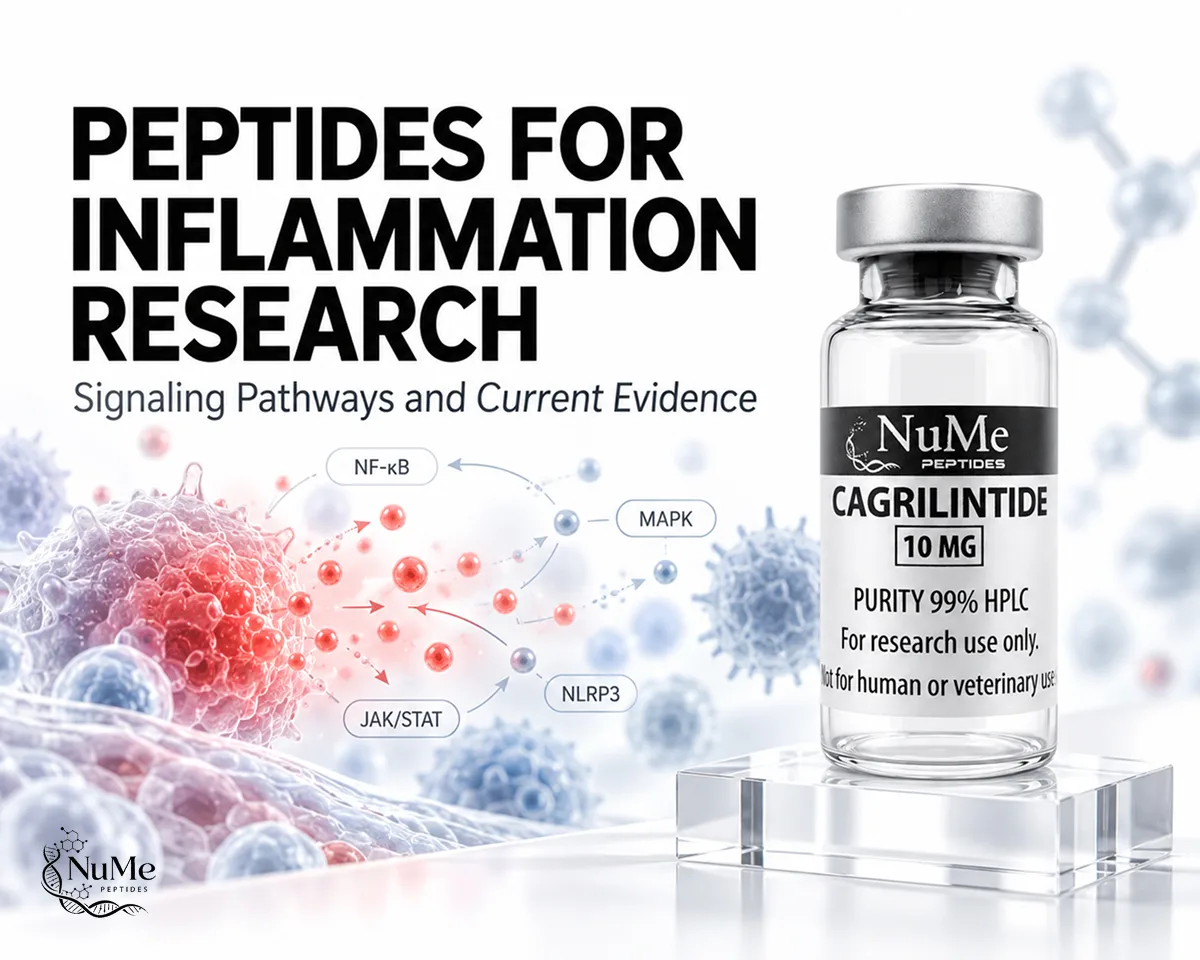
Peptides for Inflammation Research: Signaling Pathways and Current Evidence


Research into peptides for inflammation research examines how peptide-based compounds may influence cytokine signalling, immune-cell activity, oxidative stress, vascular responses, and pathways involved in the initiation and resolution of inflammation. Rather than treating inflammation as a single biological event, researchers study a network of signals that can change according to tissue type, injury model, immune status, and experimental conditions.
Inflammation itself is not inherently harmful. Acute inflammatory responses help coordinate defence, remove damaged material, and initiate tissue repair. Problems can arise when signalling becomes excessive, prolonged, or fails to resolve normally. Modern inflammation research therefore investigates both pro-inflammatory activation and the mechanisms that return tissues toward homeostasis. (Medzhitov, 2008)
For Canadian researchers, regulatory status should remain separate from experimental evidence. Health Canada has warned about unauthorized peptide products marketed in Canada and notes that unauthorized products have not undergone the regulatory assessment required to establish therapeutic safety, efficacy, and quality. (Health Canada, 2026)
For researchers looking for peptide materials for laboratory investigation, visit the Nume Peptides to explore the available research peptide collection.
How Does Inflammatory Signaling Work in Research Models?
Inflammation begins when cells detect tissue injury, cellular stress, infection-associated signals, or other disturbances.
Pattern-recognition receptors and intracellular signalling systems can then activate transcription factors and inflammatory mediators. These signals influence immune-cell recruitment, vascular permeability, oxidative responses, and communication between immune and tissue cells.
Initiation of inflammatory responses
Researchers commonly investigate mediators such as:
- tumour necrosis factor-α;
- interleukin-1β;
- interleukin-6;
- chemokines;
- reactive oxygen species;
- prostaglandin-related pathways.
These molecules can participate in useful acute responses. Therefore, inflammation research is not simply about determining whether a compound “reduces inflammation.” Instead, researchers may ask whether an experimental peptide changes the magnitude, timing, location, or resolution of a specific response.
Resolution is an active biological process
Inflammatory resolution is not simply the disappearance of signalling. Macrophage behaviour can shift, pro-inflammatory mediator production may decline, damaged cells are cleared, and tissue-repair pathways become more prominent. Failure of these transitions can contribute to persistent inflammation. (Nathan & Ding, 2010)
| Research stage | Biological activity | Common measurements |
|---|---|---|
| Recognition | Detection of stress or damage | Pattern-recognition pathways |
| Activation | Production of inflammatory mediators | Cytokines and chemokines |
| Recruitment | Immune-cell movement | Neutrophils and macrophages |
| Regulation | Changes in signalling intensity | NF-κB and related pathways |
| Resolution | Return toward tissue homeostasis | Macrophage phenotype and repair markers |
Explore research compounds studied for tissue repair, recovery, collagen support, and regenerative science in the Healing & Recovery collection.
Which Cellular Pathways Are Studied in Inflammation Research?
Inflammatory research frequently examines several interconnected signalling pathways rather than one isolated molecule.
NF-κB signalling
NF-κB is a major transcriptional regulator involved in immune and inflammatory responses. Following appropriate stimulation, NF-κB signalling can influence the expression of cytokines, chemokines, adhesion molecules, and other immune-response genes.
Researchers studying experimental peptides may therefore investigate whether a compound changes NF-κB activation or downstream gene expression. However, NF-κB also participates in normal immune defence, cell survival, and tissue responses. Complete suppression is not necessarily a desirable biological outcome.
MAPK pathways
Mitogen-activated protein kinase pathways, including ERK, JNK, and p38 signalling, respond to stress, cytokines, and extracellular stimuli.
These pathways can influence:
- inflammatory mediator production;
- cell proliferation;
- apoptosis;
- oxidative responses;
- stress adaptation.
JAK/STAT signalling
Cytokines can also signal through Janus kinase and STAT pathways. Consequently, researchers may examine phosphorylation or transcriptional changes associated with STAT proteins when investigating inflammatory responses.
Oxidative stress and inflammatory signalling
Reactive oxygen species can function both as damaging molecules and as signalling intermediates.
For this reason, peptide studies may evaluate oxidative stress together with:
- antioxidant enzymes;
- inflammatory cytokines;
- mitochondrial responses;
- lipid oxidation;
- cellular stress markers.
The interaction between oxidative stress and inflammation is one reason why a single cytokine measurement rarely provides a complete picture.
How Are Peptides Investigated in Inflammatory Research Models?
Studies of peptides for inflammation research use multiple experimental systems because immune responses vary substantially among tissues and disease models.
Cell-based research
Researchers may use:
- macrophages;
- monocytes;
- endothelial cells;
- fibroblasts;
- epithelial cells;
- neuronal or glial cells.
Cells can be exposed to an inflammatory stimulus and then evaluated for changes in signalling after peptide treatment. Typical endpoints include cytokine expression, NF-κB activity, oxidative markers, cell migration, or transcriptional changes.
Animal models
Animal research provides a more integrated view of immune responses.
Depending on the research question, investigators may evaluate:
- tissue cytokine concentrations;
- immune-cell infiltration;
- edema;
- histological changes;
- oxidative stress;
- pain-associated behaviour;
- tissue function.
However, findings from animal models cannot automatically establish human efficacy.
Human studies provide a different evidence level
When human studies exist, researchers should examine study size, control groups, endpoints, dose design, population characteristics, and whether results were replicated. A positive cell or animal result may justify further investigation, but it should not be interpreted as equivalent to controlled human evidence.
Which Peptides Are Being Studied in Inflammation Research?
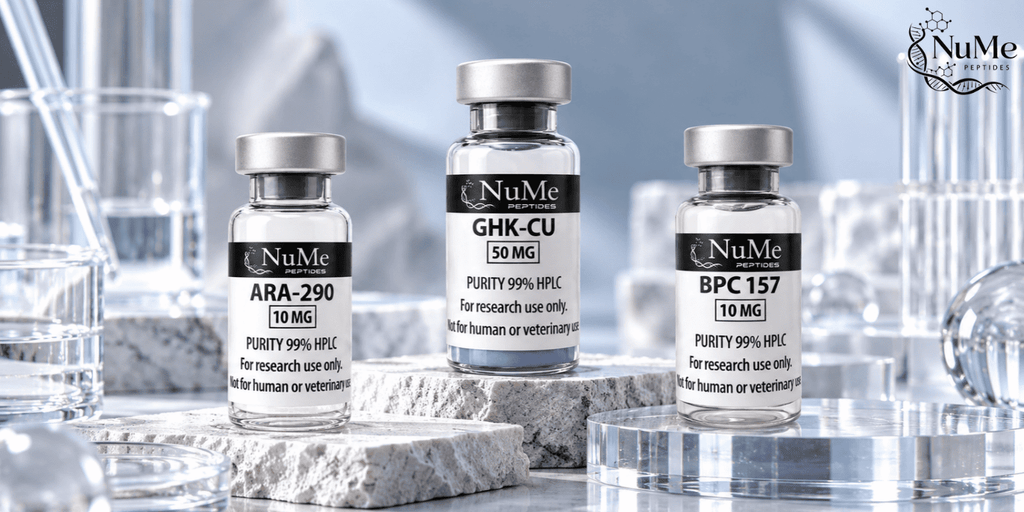
Several experimental compounds appear in inflammation-related peptide literature, including BPC-157, ARA-290, and GHK-Cu. Their mechanisms and evidence bases differ considerably.
BPC-157
BPC-157 is a synthetic 15-amino-acid peptide investigated primarily in preclinical research.
Experimental studies have explored BPC-157 in relation to:
- inflammatory signalling;
- oxidative stress;
- vascular responses;
- gastrointestinal injury;
- musculoskeletal injury;
- tissue-repair pathways.
A 2025 systematic review of BPC-157 in orthopaedic and sports-medicine research found 36 eligible studies, with 35 being preclinical and only one involving humans. This distribution highlights the substantial gap between experimental observations and established human evidence. (Vasireddi et al., 2025) BPC-157 should therefore be discussed primarily as an experimental compound when evaluating inflammation-related research.
ARA-290
ARA-290, also known in later literature as cibinetide, is an erythropoietin-derived peptide designed to retain tissue-protective signalling without producing the same erythropoietic effects associated with full-length erythropoietin. Research has focused on a receptor system commonly described as the innate repair receptor, involving erythropoietin receptor and CD131-related signalling.
Experimental and early human studies have investigated ARA-290 in relation to:
- inflammatory signalling;
- tissue protection;
- neuropathic symptoms;
- metabolic inflammation;
- repair-associated pathways.
Clinical investigations in sarcoidosis-associated small-fibre neuropathy reported changes in patient-reported and neurological outcomes, providing human research data beyond purely preclinical models. However, these findings concern specific populations and should not be generalized to unrelated inflammatory conditions. (Heij et al., 2012)
Additional research in type 2 diabetes examined ARA-290 in relation to neuropathic symptoms and metabolic measures, further illustrating its investigation as a tissue-protective signalling peptide rather than a general anti-inflammatory agent. (Brines et al., 2015)
GHK-Cu
GHK-Cu is a copper complex of glycyl-L-histidyl-L-lysine. It has been investigated in skin biology, extracellular-matrix regulation, tissue repair, oxidative stress, and inflammatory signalling.
Experimental research has associated GHK-Cu with changes involving:
- cytokine-related signalling;
- fibroblast activity;
- antioxidant responses;
- extracellular-matrix remodeling;
- tissue-protective gene expression.
Research reviews suggest that GHK-Cu may influence numerous genes related to repair and inflammation, although many proposed effects arise from cellular, genomic, or preclinical research rather than controlled clinical trials. (Pickart & Margolina, 2018)
| Compound | Major inflammation-related research areas | Main limitation |
|---|---|---|
| BPC-157 | Inflammatory signalling, oxidative stress, tissue injury | Evidence predominantly preclinical |
| ARA-290 / cibinetide | Innate repair signalling, neuropathy, tissue protection | Human evidence limited to specific research settings |
| GHK-Cu | Cytokines, oxidative signalling, matrix biology | Much evidence remains mechanistic or preclinical |
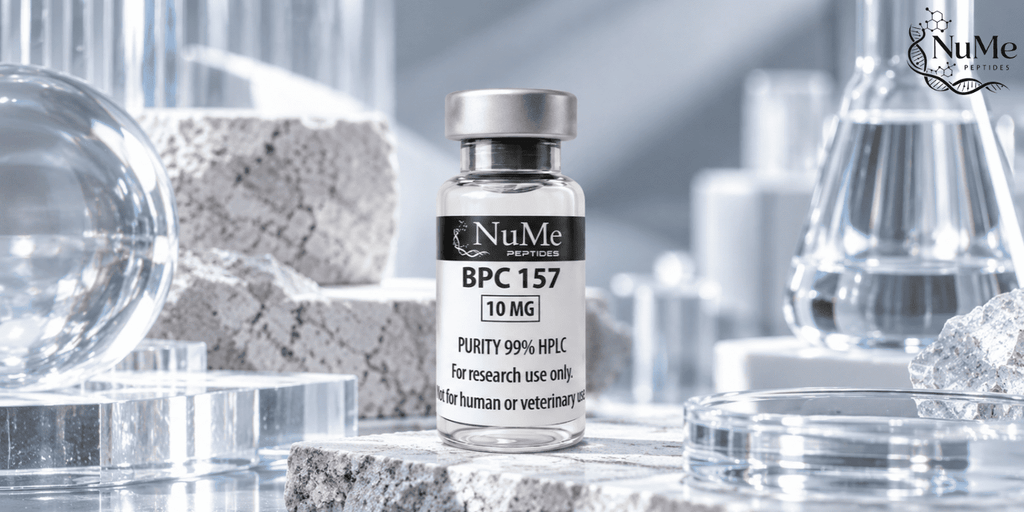
Explore batch-specific testing, analytical documentation, and research-use details for BPC-157 (10 mg).
What Does Current Research Show About Peptides and Inflammatory Signaling?
Current evidence shows that experimental peptides can influence multiple inflammatory pathways, but the interpretation depends heavily on compound, model, and endpoint.
BPC-157 remains dominated by preclinical evidence
BPC-157 has been examined in numerous injury and tissue-repair models in which inflammatory pathways are part of the experimental response. However, the lack of substantial controlled human research means that changes observed in animals cannot establish general human anti-inflammatory effects. (Vasireddi et al., 2025)
ARA-290 has a different evidence profile
ARA-290 is notable because its research extends from mechanistic studies into small human clinical investigations.
Its proposed activity centres on tissue-protective signalling rather than broad suppression of immune function. Clinical studies involving sarcoidosis-associated neuropathy and type 2 diabetes have provided early human evidence, but the findings remain specific to the populations and endpoints studied. (Heij et al., 2012) (Brines et al., 2015)
GHK-Cu research spans inflammation and repair
GHK-Cu studies frequently connect inflammatory regulation with extracellular-matrix and regenerative pathways. This overlap is biologically relevant because inflammation and tissue repair are not independent processes. Nevertheless, changes in gene expression or inflammatory markers should not automatically be interpreted as demonstrated clinical anti-inflammatory effects.
Research endpoints should remain separate
| Finding | What it indicates |
|---|---|
| Lower cytokine expression | A measured signalling change |
| Reduced NF-κB activation | Altered inflammatory pathway activity |
| Less inflammatory-cell infiltration | Tissue-level immune response changed |
| Improved tissue histology | Structural outcome changed |
| Improved human symptoms | Clinical endpoint changed |
These outcomes are related but not interchangeable. A compound can modify inflammatory signalling without producing measurable tissue or clinical improvement. Therefore, the strongest studies evaluate several levels of evidence rather than relying on one biomarker.
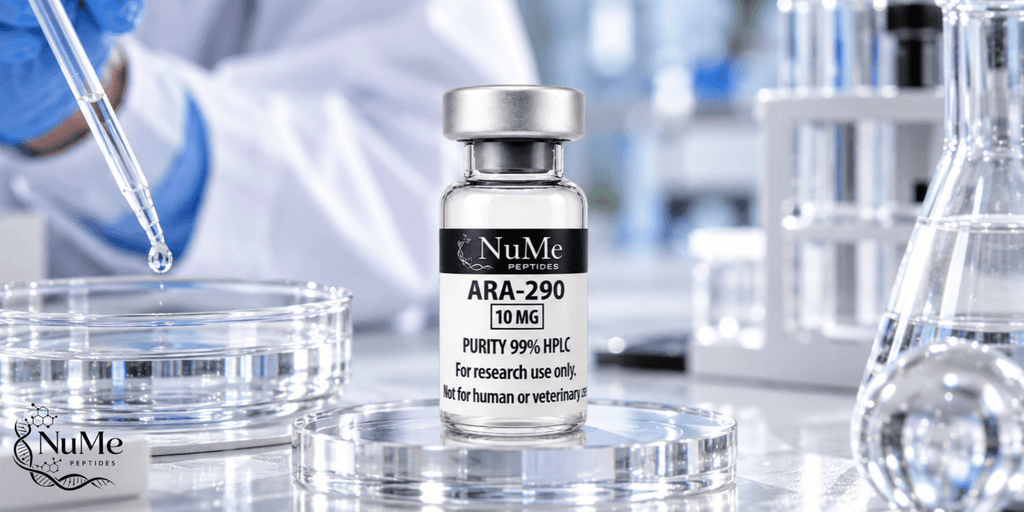
Explore research-use specifications, analytical documentation, and batch details for ARA-290 (10 mg).
FAQs About Peptides for Inflammation Research
What Are Peptides for Inflammation Research?
They are peptide compounds investigated for effects on inflammatory pathways, immune-cell responses, cytokines, oxidative stress, and tissue-protective signalling.
Does Lower Inflammatory Signaling Always Mean a Better Outcome?
No. Inflammation plays important roles in immune defence and tissue repair. Researchers generally examine whether signalling becomes better regulated rather than assuming that complete suppression is beneficial.
Is BPC-157 Proven as an Anti-Inflammatory Peptide in Humans?
No. Current BPC-157 evidence remains dominated by preclinical studies, and controlled human data are insufficient to establish broad anti-inflammatory effectiveness. (Vasireddi et al., 2025)
What Is ARA-290 Studied For?
ARA-290, or cibinetide, has been investigated for tissue-protective and inflammation-related signalling, including research involving neuropathy and metabolic disease. Human research exists, but it remains limited to specific study populations and endpoints.
Why Is GHK-Cu Included in Inflammation Research?
GHK-Cu has been investigated for effects on gene expression, oxidative stress, fibroblast activity, extracellular-matrix biology, and inflammatory signalling. Its inflammation-related effects are often studied together with tissue-repair mechanisms.
Are These Compounds Approved Anti-Inflammatory Treatments in Canada?
Research evidence should not be confused with therapeutic authorization. Health Canada requires therapeutic products to meet applicable regulatory standards before they can be marketed as approved treatments, and unauthorized peptide products have not undergone that assessment. (Health Canada, 2026)
Conclusion
Research into peptides for inflammation research examines a complex biological network involving cytokines, immune cells, NF-κB, MAPK pathways, oxidative signalling, vascular responses, and mechanisms of inflammatory resolution.
BPC-157 remains primarily supported by preclinical research, so inflammatory findings should not be generalized into established human effects. ARA-290 has a distinct research profile because its tissue-protective signalling has progressed into selected human investigations, although those findings remain condition-specific. GHK-Cu has been studied across inflammation, oxidative stress, extracellular-matrix biology, and regenerative signalling, with much of the evidence still mechanistic or preclinical.
The most accurate interpretation therefore separates molecular pathway changes from tissue-level outcomes and both from demonstrated clinical effects.
For researchers looking for peptide materials for laboratory investigation, visit the Nume Peptides to explore the available research peptide collection.
Disclaimer: This content is provided for educational and scientific research purposes only. Research peptides are intended for laboratory research only and are not intended for human consumption or medical use.