
What Are Research Peptides? A Beginner’s Guide to Peptide Research


Peptide research has become an increasingly important area of modern molecular biology, biochemistry, biotechnology, and pharmaceutical science. As scientists investigate how short amino acid sequences interact with biological systems, one fundamental question often comes first: what are research peptides, and why are they useful in scientific research? (Muttenthaler et al., 2021)
At Nume Peptides, researchers can explore peptide materials intended for laboratory and scientific applications. However, understanding the science behind these materials is just as important as understanding individual peptide names. A basic understanding of peptide structure, synthesis, molecular interactions, and analytical methods can help researchers interpret scientific literature more effectively. (Chandrudu et al., 2013)
This beginner’s guide explores the fundamentals of research peptides, including how these molecules work at the molecular level, why scientists study them, how synthetic materials differ from naturally occurring peptides, and what researchers should consider when evaluating peptide materials.
What Are Research Peptides?
Research peptides are peptide molecules prepared or supplied for scientific investigation in controlled laboratory settings. Peptides are chains of amino acids connected through peptide bonds and generally have shorter sequences than proteins. Their defined molecular structures make them useful for investigating specific biochemical and molecular questions.
The scientific value of research peptides comes partly from the ability to study a defined molecular sequence. Researchers can investigate peptide composition, structure, stability, molecular recognition, and interactions with other biological molecules. This makes peptides useful experimental components across chemistry, biology, and biotechnology. (Muttenthaler et al., 2021)
Common areas of peptide research include:
- Molecular signaling
- Protein interactions
- Receptor binding
- Enzyme studies
- Cellular communication
- Structural biology
- Peptide chemistry
- Biotechnology
Therefore, the concept extends beyond simply describing these molecules as short chains of amino acids. Their significance comes from their use as defined experimental materials that allow researchers to investigate specific molecular relationships under controlled conditions. Their significance comes from their use as defined experimental materials that allow researchers to investigate specific molecular relationships under controlled conditions. (Davenport et al., 2020)
Synthetic peptide chemistry has made these investigations increasingly precise. Solid-phase peptide synthesis, developed by Robert Bruce Merrifield, introduced a systematic approach for assembling peptide chains on an insoluble support and became a foundational method in modern peptide chemistry. (Merrifield, 1965)
Research peptides may reproduce sequences found in nature, contain modified sequences, or represent structures created for specific experimental purposes. Consequently, the term “research peptide” describes the scientific context in which a peptide is being studied rather than simply describing whether its sequence occurs naturally. (Chandrudu et al., 2013)
For researchers looking for peptide materials for laboratory investigation, browse the Nume Peptides Shop to explore the available research collection.
How Do Research Peptides Work at the Molecular Level?
Understanding peptide research also requires looking at how these molecules behave at the molecular level.
A peptide’s amino acid sequence influences its chemical and physical characteristics. The sequence can affect molecular charge, flexibility, conformation, stability, and potential interactions with other biological molecules.
Researchers may investigate peptide interactions with:
- Cell receptors
- Enzymes
- Proteins
- Cell membranes
- Signaling molecules
- Other molecular targets
The relationship between sequence and molecular interaction is one of the central themes of peptide science.
Amino Acid Sequence
Every peptide has a specific sequence of amino acids. Changing the order or identity of amino acids can change the resulting molecule’s properties. Researchers therefore pay close attention to sequence when designing experiments or comparing related peptide structures.
Molecular Conformation
Peptides are not always rigid linear chains. Their amino acid composition and surrounding environment can influence how they fold or organize in three dimensions.
Scientists can use techniques such as nuclear magnetic resonance spectroscopy, crystallography, spectroscopy, and computational modeling to investigate peptide structures.
Molecular Binding
Researchers may also study whether a peptide interacts with a particular receptor, enzyme, or protein. Binding assays can provide information about molecular recognition, while computational approaches can help researchers explore potential interaction models.
Chemical Modification
Peptide chemistry also allows scientists to investigate how structural modifications influence molecular properties. Researchers can modify amino acid residues, peptide backbones, or other structural features to study changes in stability, molecular recognition, or other characteristics. Advances in synthetic methods continue to expand the range of peptide structures that can be produced and investigated. (Veedu et al., 2026)
These relationships explain why peptide structure is so important in experimental research. Scientists are not only interested in what a peptide is made of; they also want to understand how its molecular structure influences its behavior under specific experimental conditions. Researchers are not only interested in what a peptide is made of. They also want to understand how its molecular structure influences its behavior under specific experimental conditions.
SEE MORE:
Why Are Peptides Important in Scientific Research?
To understand their importance in science, it is useful to examine why researchers use peptides as experimental tools. Peptides occupy an interesting position between small molecules and larger proteins, combining defined amino acid sequences with the ability to be synthesized, modified, and characterized. (Muttenthaler et al., 2021)
This flexibility makes peptide research relevant to several scientific disciplines. Researchers can compare different sequences, investigate structural changes, and examine how specific molecular characteristics influence interactions with biological targets. (Chandrudu et al., 2013)
Molecular Biology
Researchers can use peptides to investigate cellular signaling, molecular recognition, and interactions between biological components.
Studying a defined peptide sequence can help researchers isolate particular molecular relationships rather than attempting to interpret an entire biological system at once.
Biochemistry
In biochemical research, peptides can be used to examine enzyme interactions, protein binding, molecular recognition, and other biochemical processes.
Their defined composition can make them useful experimental models when researchers want to understand specific molecular interactions.
Structural Biology
Peptide structures can be analyzed to understand how amino acid sequences influence molecular conformation. These studies contribute to broader research into proteins and biological macromolecules.
Biotechnology
Synthetic peptide technology provides researchers with the ability to produce defined sequences for experimental purposes. This supports research into molecular recognition, analytical methods, biomaterials, and other biotechnology applications.
Pharmaceutical Science
Peptide research also contributes to drug discovery and pharmaceutical science. A review in Nature Reviews Drug Discovery describes how advances in molecular biology, peptide chemistry, peptide libraries, and rational design have contributed to peptide drug discovery.
Importantly, this does not mean that every research peptide is a pharmaceutical product. Research findings must always be interpreted according to the experimental model, methodology, and level of evidence.
Overall, their value comes from their ability to function as controlled scientific tools for investigating defined molecular structures and interactions.
How Are Research Peptides Different From Naturally Occurring Peptides?
Another important consideration is the difference between laboratory research materials and peptides naturally produced by living organisms.
Naturally occurring peptides are produced through biological processes and can have roles in signaling, regulation, defense, metabolism, and other biological functions. Many endogenous peptides interact with specific receptors and participate in biological signaling networks. (Davenport et al., 2020)
Research peptides, by contrast, are prepared or supplied specifically for scientific investigation. They may reproduce a naturally occurring sequence, contain modifications, or represent a synthetic structure created for a particular experimental question. (Chandrudu et al., 2013)
| Feature | Naturally Occurring Peptides | Research Peptides |
|---|---|---|
| Origin | Produced by biological systems | Prepared or synthesized for research |
| Primary context | Natural biological processes | Controlled laboratory investigation |
| Sequence | Determined biologically | Selected or designed for research |
| Purpose | Biological function | Experimental investigation |
| Production | Cellular biosynthesis | Chemical or biological preparation |
The distinction becomes particularly important when considering synthetic peptide production.
Solid-phase peptide synthesis allows amino acids to be assembled in a controlled sequence. According to published methodological reviews, SPPS involves steps such as amino acid coupling, deprotection, cleavage, and, where applicable, additional structural transformations.
Modern research is also exploring alternative peptide synthesis approaches. A 2026 review in Nature Reviews Chemistry discusses advances in electrochemical peptide synthesis and modification, reflecting the continuing development of methods for producing and modifying peptide molecules.
Therefore, what are research peptides should not be confused with the question of whether a peptide occurs naturally. A research peptide describes a scientific research context, while “naturally occurring” describes biological origin.
A synthetic peptide can replicate a naturally occurring sequence while still being produced specifically for laboratory investigation.
For researchers looking for peptide materials for laboratory investigation, browse the Nume Peptides Shop to explore the available research collection.
What Should Researchers Know Before Studying Research Peptides?
Researchers considering peptide studies should understand that what are research peptides is only the starting point. The quality of an experiment also depends on material characterization, study design, analytical methods, handling, and interpretation.
Define the Research Question
A clear research question should come before selecting a peptide material.
Researchers should identify the molecular mechanism, interaction, structural property, or biological process they want to investigate. This helps determine which experimental model and analytical methods are appropriate.
Evaluate Peptide Identity and Purity
Researchers should establish what material they are actually studying.
Depending on the project, relevant information may include:
- Peptide name
- Amino acid sequence
- Molecular mass
- Purity
- Batch or lot information
- Analytical results
- Storage conditions
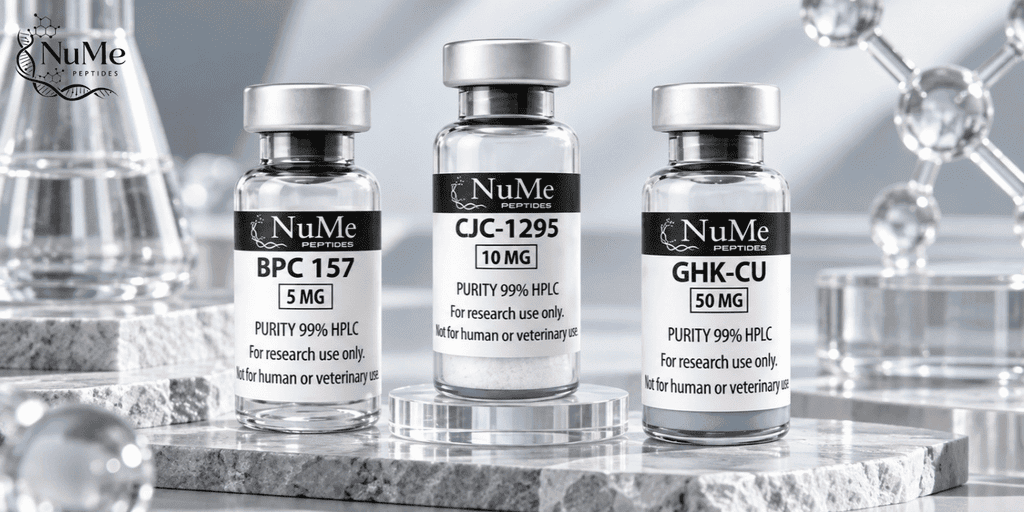
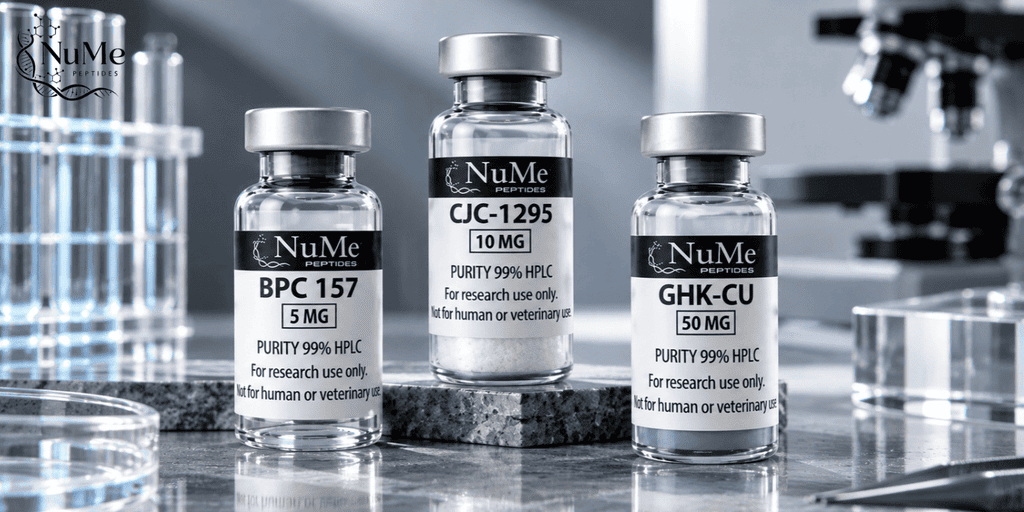
HPLC is widely used to assess peptide purity, while mass spectrometry can provide information about molecular mass and identity. These techniques answer different analytical questions and can complement one another.
Consider Stability and Handling
Peptide stability can be influenced by environmental conditions such as temperature, moisture, solvent composition, pH, and storage duration.
Appropriate laboratory handling is therefore important for maintaining consistency between experiments.
Examine the Evidence Carefully
Researchers should also distinguish between different levels of scientific evidence.
An in-vitro experiment, for example, provides information under controlled laboratory conditions. An animal study answers different questions, while human research involves additional methodological and regulatory considerations.
A result from one experimental model should not automatically be generalized to another.
Consider Manufacturing Methods
Understanding how research peptides are produced can also provide useful context. SPPS remains an established method for peptide synthesis, while newer approaches continue to address efficiency, scalability, and sustainability. Recent research has explored alternative synthesis strategies and greener approaches to peptide production.
Together, these considerations provide a more practical understanding of how peptide materials fit into scientific investigation.
SEE MORE:
FAQs About Research Peptides
What are research peptides used for?
Research peptides are used as laboratory materials for investigating molecular interactions, biochemical mechanisms, protein relationships, cellular pathways, and peptide structure. Their applications extend across molecular biology, biochemistry, structural research, and biotechnology. (Muttenthaler et al., 2021)
Are research peptides the same as pharmaceutical products?
No. Research peptides are materials used for scientific investigation, while pharmaceutical products are subject to specific regulatory, manufacturing, safety, and approval requirements. Peptide research can contribute to pharmaceutical development, but a research material should not automatically be considered a pharmaceutical product. (Muttenthaler et al., 2021)
How are research peptides produced?
Many synthetic peptides are produced using solid-phase peptide synthesis, while other approaches include solution-phase methods and newer synthetic strategies. Recent research has also explored electrochemical methods for peptide synthesis and modification.
Why do scientists study peptides?
Scientists study peptides because their defined amino acid sequences provide useful systems for investigating molecular recognition, receptor interactions, protein relationships, structural properties, and biochemical mechanisms. (Davenport et al., 2020)
How are research peptides analyzed?
Researchers can use techniques such as HPLC, mass spectrometry, spectroscopy, and other analytical approaches. The appropriate method depends on the research question and the characteristics being investigated. (Chandrudu et al., 2013)
What should researchers look for when evaluating research peptide materials?
Researchers should consider peptide identity, sequence information, purity, analytical documentation, batch information, storage requirements, and whether the material is appropriate for the intended experimental design.
Can laboratory research findings automatically be applied to humans?
No. Findings depend on the experimental model and methodology. Results from biochemical, cellular, or preclinical research require additional evidence before conclusions about human applications can be established. (Muttenthaler et al., 2021)
Understanding the role of research peptides provides a useful foundation for exploring peptide science. These molecules give researchers defined systems for examining amino acid sequences, molecular interactions, structural characteristics, and biochemical mechanisms.
The field continues to evolve as synthetic chemistry, analytical technologies, computational modeling, and peptide engineering advance. Recent research into new synthesis methods demonstrates that peptide science is not limited to traditional laboratory techniques; researchers continue developing new ways to produce, modify, characterize, and study peptide molecules.
For beginners, the most important takeaway is that research peptides represent a broad category of peptide materials studied in scientific settings. Their research value depends not only on the peptide sequence itself but also on experimental design, analytical verification, appropriate handling, and careful interpretation of evidence.
At Nume Peptides, researchers can explore research peptide materials intended for scientific and laboratory applications. Visit Nume Peptides to learn more about available research materials and continue exploring the science behind peptide research.
Disclaimer: This content is provided for educational and scientific research purposes only. Research peptides are intended for laboratory research only and are not intended for human consumption or medical use.


Really helpful introduction for someone who is just getting familiar with peptide research. I especially liked the section about checking identity and purity rather than focusing only on the peptide name. Do you plan to cover how researchers typically interpret HPLC and mass spectrometry results in a future article?
I found the comparison between naturally occurring peptides and research peptides quite clear and easy to follow. The point that a research peptide describes the research context rather than simply its biological origin was interesting. It would be great to see a more detailed example of this distinction in a future post.
This was a nice beginner-friendly overview, especially the explanation of how amino acid sequences can influence molecular interactions. I also appreciated the reminder that results from in-vitro or animal studies should not automatically be applied to humans. Are there any specific peptide research topics you would recommend beginners learn about after understanding the basics?